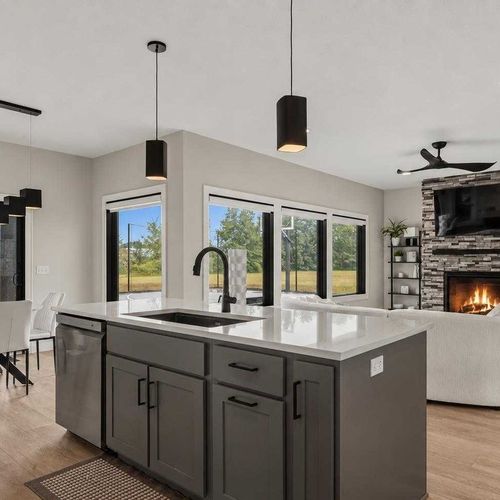


A house can be the one. But before you write an offer, make sure the numbers are, too.
There’s a moment in every home search when browsing turns into buying. You find the kitchen you love. The backyard checks the box. The location works. Then comes the question that matters: What should we actually offer?
That answer shouldn’t come from the list price alone.
A smart Fort Wayne home purchase is built around a collection of numbers—from your comfortable monthly payment and available cash to your down payment, estimated interest rate, closing costs, and the property’s recent market activity.
Here’s your 20-number cheat sheet to run through before you make an offer.
- Your Maximum Comfortable Monthly Payment
This is not necessarily the same as the maximum payment a lender says you can afford.
Start with the number that feels financially comfortable for your household each month. Then account for the full housing payment—not just principal and interest.
Your target should leave room for utilities, maintenance, savings, travel, emergencies, and the rest of your life.
Your number: $________ / month
- Your Pre-Approval Amount
Your pre-approval gives you an idea of how much a lender is willing to finance based on your financial profile.
But treat it as a ceiling, not a shopping target.
If you're pre-approved for $500,000, that doesn't automatically mean a $500,000 home is the right fit for your budget.
Your number: $_________
- Your Available Cash for the Purchase
How much money could you realistically put toward the transaction without draining your reserves?
Include funds earmarked for your down payment, closing costs, earnest money, inspections, moving expenses, and other upfront costs.
Your number: $________
- Your Down Payment
Your down payment affects how much you borrow—and potentially your monthly payment and other loan costs.
It doesn't always have to be 20%. Depending on the loan program and your circumstances, buyers may have other options.
Before assuming a specific percentage is right for you, ask your lender to run the numbers.
Your number: $________ or ________%
- Your Estimated Interest Rate

Even a small change in interest rate can affect your monthly payment and the total cost of borrowing.
Ask your lender for a current estimate and, ideally, compare a few scenarios so you understand what different rates would mean for the homes you're considering.
Your estimated rate: ________%
Rates can change, and your actual rate will depend on your loan, financial profile, market conditions, and other factors.
- Your Estimated Loan Amount
Here's the basic calculation:
Purchase price – down payment = approximate loan amount
For example, a $350,000 purchase with $70,000 down would mean an approximate $280,000 loan before accounting for other financing considerations.
Knowing this number makes it easier to compare homes at different price points.
Your number: $________
- Your Estimated Principal + Interest Payment
Now turn the loan amount and interest rate into an estimated monthly principal-and-interest payment.
This is only part of the picture—but it's an important starting point.
Your lender can provide a more precise estimate based on the specific loan you're considering.
Your number: $________ / month
- Your Estimated Property Taxes
Two homes with identical purchase prices can have different monthly costs.
Property taxes are one reason.
Before making an offer, ask for an estimate of the home's property taxes and understand how they factor into your projected monthly payment.
Your estimate: $________ / year or $________ / month
- Your Estimated Homeowners Insurance
Don't forget to include insurance in the monthly housing equation.
Your lender can help estimate this cost, while an insurance provider can give you a more precise quote for the property.
Your estimate: $________ / year or $________ / month
- Your Estimated HOA or Association Fee

If the property is part of an HOA or another homeowners association, find out exactly what you'll be paying—and what that fee covers.
Ask whether there are additional assessments, restrictions, or upcoming changes you should know about.
Your number: $________ / month
- Your Estimated Closing Costs
The purchase price isn't the amount you'll need to bring to closing.
There can be lender fees, title-related costs, recording fees, prepaid expenses, insurance, taxes, and other transaction expenses.
Your lender and real estate agent can help you estimate these costs for your specific purchase.
Your estimate: $________
- Your Earnest Money Amount
Earnest money is a deposit that accompanies an offer and demonstrates your commitment to the purchase.
The amount can vary depending on the transaction and terms of the offer.
Before writing your offer, know how much cash you're comfortable committing and understand how the earnest money will be handled under the purchase agreement.
Your number: $________
- Your Cash Reserve After Closing
This is one number buyers sometimes overlook.
Ask yourself: After I pay my down payment and closing costs, how much cash will I still have?
Buying a home shouldn't leave you with nothing in the bank.
A water heater doesn't care that you just closed on your house.
Your number: $________ remaining
- Your Offer Price
Now we get to the number everyone talks about.
Your offer price should be informed by more than the home's asking price.
Consider recent comparable sales, the property's condition, current competition, days on market, seller circumstances when known, and your own budget.
The goal is to understand the market—not simply to pick the biggest number you're willing to spend.
Your number: $________
- The Home’s Price per Square Foot

Price per square foot can be a useful comparison tool, particularly when looking at similar properties.
But don't use it in isolation.
A 2,000-square-foot home with a finished basement, updated kitchen, lake access, newer mechanicals, or a premium location isn't necessarily comparable to another 2,000-square-foot home.
Think of price per square foot as one data point, not the answer.
Your number: $________ / sq. ft.
- The Number of Comparable Homes Recently Sold
Before making an offer, look at what similar homes have actually sold for—not just what other sellers are asking.
Your agent can help identify comparable properties and explain which differences matter.
In a changing market, recent sales can provide important context for determining where a particular property fits.
Your number: ________ comparable sales reviewed
- The Home’s Days on Market
How long has the property been available?
Days on market can provide context about buyer interest, pricing, property condition, and market dynamics.
But don't assume that a high number automatically means "lowball it" or that a newly listed home automatically requires an aggressive offer.
The number needs context.
Your number: ________ days
- The Number of Offers on the Table
If the seller has received multiple offers, your strategy may look different than it would in a situation with little competition.
If there are no other offers, you may have more room to negotiate certain terms. If there are several, price may be only one part of the conversation.
Ask your agent what is known about the competitive situation before deciding how to structure your offer.
Your number: ________ known offers
- Your Maximum Offer Price
This is different from your initial offer.
Before negotiations begin, decide privately on the highest price that still makes financial sense for you.
Then stick to the number that fits your budget—not the number that wins an emotional bidding war.
Your number: $________
- Your “Walk-Away” Number

This might be the most important number on the list.
Your walk-away number is the point where the purchase no longer makes sense for you—whether because of price, monthly payment, repairs, cash requirements, or another factor.
Know it before negotiations get emotional.
Because the right home at the wrong number can still be the wrong purchase.
Your number: $________
The Number That Matters Most? The One That Fits Your Life.
Buying a home involves a lot of numbers, but the objective isn't to make them all as large—or as small—as possible. It's to understand what they mean together.
A $400,000 home isn't simply a $400,000 decision. Your financing, taxes, insurance, cash reserves, expected maintenance, market conditions, and offer terms all factor into the equation.
In Fort Wayne, a local team that knows the market can help you put those numbers into context.

That's where The Regan + Ferguson Group comes in. From connecting you with trusted lending professionals to helping you evaluate comparable sales, understand market conditions, and build a thoughtful offer, we're here to help you make sense of the numbers—not just the listing.
Because buying a home is a big financial decision. You shouldn't have to figure out the numbers alone. Before you fall completely in love with the house, fall in love with the numbers. Then make your offer with your eyes wide open.
Ready to start running the numbers? Connect with The Regan + Ferguson Group to begin your Fort Wayne home search.
Check out this article next